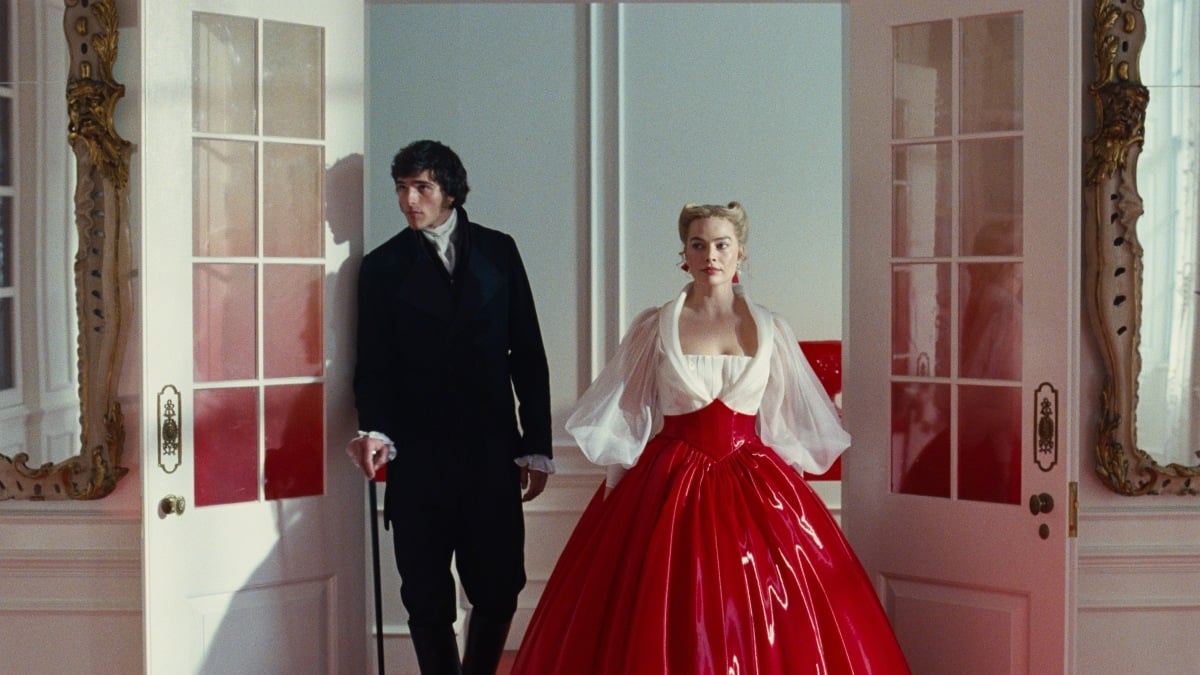
Unveiling the "Skin Room": Emerald Fennell's Audacious Vision for Wuthering Heights
Emily Brontë's Wuthering Heights has haunted readers for over a century with its raw passion, desolate moors, and tormented souls. Yet, in the hands of director Emerald Fennell, the classic tale receives a startlingly modern, almost dreamlike reimagining, highlighted by one of its most talked-about and genuinely unsettling design choices: the "Skin Room" built for Margot Robbie's Catherine Earnshaw. Far from the wind-chapped, unkempt characters often envisioned, Fennell's world, and particularly Cathy's intimate space, is a vibrant, at times visceral, exploration of desire and identity that has captivated and disturbed audiences in equal measure.
The concept of the glamorous Skin Room in Wuthering Heights isn't merely an aesthetic flourish; it's a profound, almost literal, plunge into the psychological landscape of its protagonist. As production designer Suzie Davies revealed, the room's walls and floor were meticulously crafted from photocopies of Robbie’s own arm, transforming Catherine's bedroom in Thrushcross Grange into an uncanny canvas that mirrors her very being. This bold move anchors Fennell's adaptation in a unique visual language, challenging traditional interpretations and inviting viewers to experience Brontë’s narrative through a profoundly different lens.
The Disturbing Intimacy of the Skin Room Wuthering Heights
Imagine stepping into a room where every surface replicates human skin. This is the arresting reality of the controversial Skin Room in Wuthering Heights. Fashioned from latex and fabric, the bedroom walls and floor in Catherine's new home are not just skin-toned; they meticulously replicate Margot Robbie's own complexion. This includes incredibly intimate details: visible veins, subtle moles, and even delicate, stray hairs. The effect is one of profound, almost invasive, intimacy, creating a space that is both seductive and deeply unsettling.
This design choice elevates Catherine's bedroom from a mere setting to a literal extension of her own flesh, a living, breathing, yet inanimate cage. It forces viewers to confront the character's journey into a world of opulent confinement at Thrushcross Grange. After her wild, unbridled youth on the moors, Cathy finds herself in a gilded prison, and the skin room symbolizes her increasingly internalized struggle. It speaks to a profound self-absorption, a narcissistic mirroring that suggests Catherine is literally surrounded by herself, perhaps struggling with identity and yearning within the confines of her marriage to Edgar Linton.
The "disturbing details" of the room lie in its hyper-realism. While beautiful in its intricate execution, the replication of human skin on such a large scale taps into an "uncanny valley" effect – something that looks almost human but isn't quite right, leading to a sense of unease. It transforms Cathy's sanctuary into a space that hints at vulnerability, perhaps even decay, rather than comfort. It's a powerful visual metaphor for a woman whose outward glamour often masks her inner turmoil.
Emerald Fennell's "Fever Dream" Aesthetic
Emerald Fennell’s *Wuthering Heights* is a stark departure from the typical gloomy, desolate depictions of Brontë’s classic. Instead, Fennell conjures a world that is less a period drama and more a "fever dream," as hair and makeup designer Siân Miller describes it. This is a *Wuthering Heights* envisioned through the eyes of a 14-year-old, bursting with vibrant, almost technicolor hues and fantastical elements.
Gone are the plain, wind-chapped faces. In their place, characters exist in kaleidoscopic surroundings. Margot Robbie’s Cathy, for instance, sports crystalline freckles and flaxen hair often adorned with intricate red ribbons. Jacob Elordi’s Heathcliff breaks traditional stoicism with a gold tooth and a hoop earring, embodying a raw, untamed energy that complements the film's heightened reality. This reinterpretation isn't merely for shock value; it serves to make the story—and the accompanying glam—a lot more fun and accessible to a contemporary audience, while still delving into the intense emotional core of the novel.
Fennell's vision, crafted with collaborators like Miller, leverages hair and makeup as a crucial storytelling vehicle. Miller explains how this approach, particularly with Cathy, helps to visually mark the passing of time and her transformation. The characters, especially as children, are depicted as windblown and flushed from their isolated existence, reflecting the wildness of Wuthering Heights. As Cathy transitions to Thrushcross Grange, her world becomes one of elaborate dresses, jewels, and "playing dress-up," signaling a shift from untamed freedom to societal expectation, all underpinned by this vivid, almost surreal aesthetic.
The Artistic Tapestry: From Mood Boards to Runway Glamour
The creation of Fennell’s distinctive *Wuthering Heights* universe, including the startling Skin Room Wuthering Heights, was a deeply collaborative and creatively rich process. Hair and makeup designer Siân Miller, who also worked with Fennell on *Saltburn*, sheds light on the extensive influences that shaped the film's unique aesthetic.
The journey began with Fennell's evocative mood board, a smorgasbord of imagery drawing from diverse sources: high fashion, fine art, photography, cinema, architecture, and even raw wilderness. Miller recalls seeing "pictures of children with grass-stained knees, trees that are bent over on the moors, and brutalist architecture," alongside stills from films like *Far From the Madding Crowd*. This eclectic mix laid the foundation for a film that feels both historically informed and refreshingly contemporary.
Miller meticulously broke down the script into three distinct acts, each with its own visual language: Wuthering Heights (Cathy's initial, wild home), Thrushcross Grange (her sophisticated, yet confining, marital home), and the dramatic turning point at the end. For the childhood scenes at Wuthering Heights, the goal was to portray characters looking windblown and flushed, reflecting their isolated, untamed environment. Blush was used liberally to emphasize this natural vigor.
However, it's Cathy's transition to Thrushcross Grange that truly highlights the film's luxurious and unsettling glamor. Surrounded by "wonderful dresses and jewels," her environment suggests everything a woman could desire, yet paradoxically, "there’s nothing to do there, other than to play dress-up." This observation underscores the superficiality and emotional emptiness beneath the opulent surface, perfectly encapsulated by the introspective, almost narcissistic design of her skin-themed bedroom.
Miller also drew significant inspiration from the world of high fashion, particularly runway shows. She cites specific references such as "Pat McGrath for Galliano’s Dior fall/winter 2007 and 2009" collections. This choice reflects a deliberate strategy: when reinterpreting a period drama, looking at how modern designers like Vivienne Westwood have historically re-contextualized historical styles for a contemporary audience provides a blueprint for making the past feel fresh and relevant.
This intricate blend of historical context, high fashion, and raw emotional insight allowed the creative team to use hair and makeup as a powerful narrative device. It allowed them to track the passing of time and the profound psychological evolution of Cathy, transforming her from a wild child of the moors into a complex woman trapped between love and societal expectations, all within a visually stunning and unforgettable cinematic landscape.
Conclusion: The Enduring Impact of a Bold Artistic Statement
Emerald Fennell’s *Wuthering Heights*, with its polarizing yet undeniably captivating Skin Room Wuthering Heights, stands as a testament to the power of reimagination. By embracing a "fever dream" aesthetic and pushing boundaries with production design and character styling, Fennell has not merely adapted a classic; she has reinterpreted it, offering a visceral, psychological journey that is uniquely her own. The controversial 'Skin Room' for Margot Robbie’s Catherine Earnshaw is more than just a shocking visual; it's a profound metaphor for self-obsession, gilded confinement, and the intense internal life of a woman torn between two worlds. This audacious approach ensures that Fennell’s *Wuthering Heights* will not only provoke discussion but also leave an indelible mark on how we perceive and engage with beloved literary works.