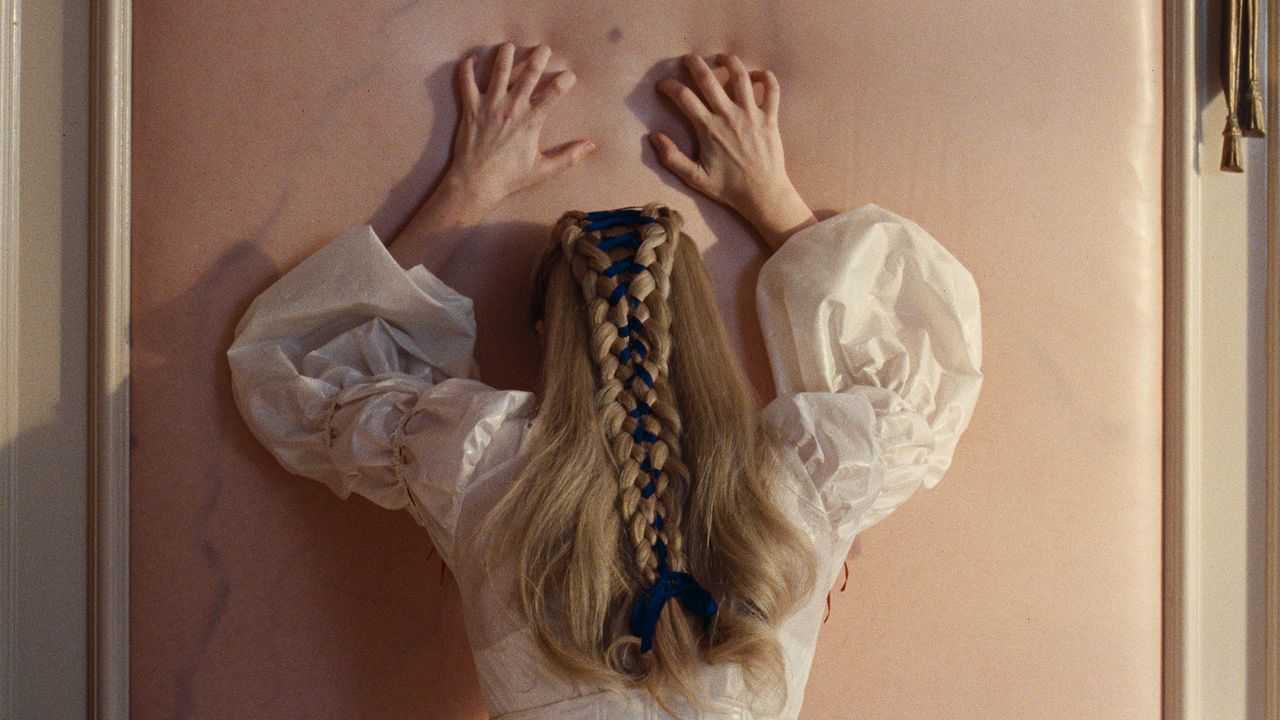
Emerald Fennell's Wuthering Heights: Inside Its Glamorous Skin Room
Emerald Fennell's name has become synonymous with stylish, subversive storytelling, and her interpretation of Emily Brontë's gothic masterpiece, *Wuthering Heights*, is no exception. While the novel typically evokes images of windswept, gloomy moors and rugged, unkempt characters, Fennell's vision plunges audiences into a kaleidoscopic dreamscape where glamour intertwines with the untamed. At the heart of this audacious reimagining lies one of its most talked-about and provocative design elements: the "Skin Room" built for Margot Robbie's Catherine Earnshaw. This intimate, unsettling space perfectly encapsulates Fennell's bold departure from tradition, sparking conversations and solidifying her film as a truly unique cinematic experience.
The Genesis of the "Skin Room": A Study in Intimate Design
The infamous "Skin Room" is more than just a set; it's a visceral extension of Catherine Earnshaw herself. Envisioned as Cathy's private sanctuary within Thrushcross Grange after her marriage to Edgar Linton, the bedroom walls and floor are meticulously crafted to replicate Margot Robbie’s complexion. This isn't just a suggestion of skin tone; the details are disturbingly precise, featuring replicated veins, moles, and even stray hairs. It’s a design choice that borders on the narcissistic, creating a space where Catherine is literally enveloped by herself, hinting at a profound self-absorption or perhaps a suffocating sense of identity.
The ingenious, albeit unsettling, idea originated from production designer Suzie Davies. To achieve this unprecedented level of detail, Davies and her team utilized photocopies of Robbie's arm as a foundation, translating these intricate skin patterns onto latex-and-fabric walls. This process speaks volumes about the meticulous artistry involved, pushing the boundaries of set design to create an environment that is both luxurious and deeply unsettling. The *Skin Room Wuthering Heights* thus becomes a psychological landscape, reflecting Catherine's internal world – a world of opulent beauty, but one perhaps marked by a haunting isolation and an obsessive introspection that ultimately contributes to her tragic fate.
Emerald Fennell's Wuthering Heights: A Technicolor Fever Dream
Fennell’s *Wuthering Heights* is a deliberate and dramatic departure from the austere, often bleak adaptations that have come before. Where Brontë’s moors are traditionally depicted as dark and forbidding, Fennell's world explodes with vibrant, almost technicolor hues, transforming the narrative into what she herself describes as "a fever dream imagined through the eyes of a 14-year-old." This artistic choice redefines the emotional and visual landscape, making the story, and its inherent drama, "a lot more fun" through the lens of glamorous excess.
This glamor extends to the characters' appearances. Margot Robbie's Cathy, for instance, boasts crystalline freckles and flaxen hair often adorned with intricate red ribbons, a far cry from the wind-chapped, bare-faced figures often associated with the novel. Jacob Elordi's Heathcliff, too, receives a stylish makeover, sporting a gold tooth and a matching hoop earring, challenging the traditional image of the brooding, wild hero. These visual flourishes are not mere aesthetics; they serve to underline Fennell's vision of a heightened reality, where beauty and allure are as dominant as the wild passions that consume the protagonists. The film effectively uses these striking visuals to draw a new generation of viewers into a classic story, proving that reinterpretation can breathe exciting new life into familiar narratives.
The Artistry Behind the Glamour: Hair, Makeup, and Character Transformation
Bringing Fennell's extravagant vision to life required a hair and makeup designer with an equally daring approach. Siân Miller, who previously collaborated with Fennell on *Saltburn*, was instrumental in crafting the elaborate beauty looks that define this adaptation. Miller's creative process began with Fennell’s evocative mood board, a rich tapestry of imagery spanning fashion, art, photography, film, architecture, and even candid pictures of children with grass-stained knees. This eclectic mix, which included references to brutalist architecture and stills from films like *Far From the Madding Crowd*, provided a robust foundation for her designs.
Miller meticulously broke down the script into three distinct acts, allowing hair and makeup to serve as a visual vehicle for Cathy's transformation and the passing of time:
* **Wuthering Heights (Childhood):** In their initial home, the characters are depicted as windblown and flushed, reflecting their isolation and the raw, untamed nature of their upbringing. Miller’s approach here emphasizes natural, almost wild beauty, with hints of blush to convey the chill of the moors.
* **Thrushcross Grange (Adulthood):** Upon moving to Thrushcross Grange, Cathy's aesthetic shifts dramatically. Surrounded by "wonderful dresses and jewels," she has everything she could desire, yet "there’s nothing to do there, other than to play dress-up." This period is marked by elaborate beauty looks, intricate hairstyles, and a polished glamour that symbolizes her newfound, albeit perhaps superficial, societal status.
* **The Turning Point:** The later stages of the film see these looks evolve further, reflecting Cathy's internal turmoil and the tragic unfolding of events.
Miller’s inspiration extended beyond traditional period drama references, drawing heavily from contemporary runway aesthetics. She cited Pat McGrath's iconic work for Galliano’s Dior fall/winter collections of 2007 and 2009, as well as Vivienne Westwood's historical reinterpretations, as key influences. This fusion of high fashion with classic literature underscores Fennell's desire to create a *Wuthering Heights* that is both rooted in its source material and vibrantly modern, a testament to how creative teams can leverage runway trends to tell compelling stories in unique historical contexts.
Inside the Debate: The Skin Room's Provocative Legacy
The unveiling of the *Skin Room Wuthering Heights* and the broader aesthetic of Emerald Fennell's adaptation instantly ignited fervent discussion among critics and fans alike. This provocative design choice, along with the film's overall glamorous reinterpretation, challenges deeply ingrained expectations of Emily Brontë's classic novel. Many viewers accustomed to stark, naturalist portrayals found Fennell's opulent, almost dreamlike vision a startling, even unsettling, departure.
This debate, however, is precisely what Fennell's work often aims to achieve. By taking such bold liberties – from the literal replication of Margot Robbie’s skin on the walls to Jacob Elordi’s unexpected gold tooth – the film forces audiences to reconsider the narrative and its characters from an entirely new perspective. Is it faithful to the text? Perhaps not in the traditional sense. But it is undeniably faithful to an *interpretation* of the text, filtered through a distinctly modern, hyper-stylized lens. This modern take seeks to captivate and provoke, making the centuries-old story relevant and startling for a contemporary audience. The film’s willingness to disrupt established norms serves as a powerful reminder that adaptation is an act of re-creation, allowing for endless possibilities and artistic freedom. For deeper dives into the specifics of this intriguing design, explore analyses such as
Unpacking Margot Robbie's Controversial 'Skin Room' in Wuthering Heights and
Wuthering Heights: The Margot Robbie Skin Room's Disturbing Details.
The *Skin Room Wuthering Heights* is more than just a striking visual; it is a symbol of Emerald Fennell's directorial audacity. It represents a commitment to a singular vision that prioritizes psychological depth and visual impact over traditional fidelity, offering a fresh, invigorating, and undeniably glamorous perspective on a beloved literary classic.
Ultimately, the *Skin Room Wuthering Heights* stands as a potent metaphor for Emerald Fennell’s entire adaptation: intimate, unsettling, undeniably glamorous, and utterly unforgettable. It encapsulates a vision that dares to be different, transforming a gothic romance into a visually intoxicating "fever dream" that challenges conventions and sparks fervent discussion. By reinventing Catherine Earnshaw's world with such audacious detail and high fashion flair, Fennell's *Wuthering Heights* proves that even the most cherished classics can be reinterpreted with a provocative, glamorous edge, leaving an indelible mark on cinematic history and offering new insights into the enduring power of Brontë’s timeless tale.